


Walking the Ground Where Flight Began


The Wright Brothers National Memorial doesn’t feel like a place you rush through. The moment you step onto the grounds, the scale of the space slows you down. The hill rises gradually, the paths stretch out, and the wind is almost always present, reminding you that this was never an accidental location. The openness matters. It gives context to the story without explaining it outright.
Walking across the field where the first flights took place feels surprisingly informal. There’s no dramatic barrier between you and history. You move along marked paths, reading plaques at your own pace, sometimes stopping, sometimes continuing without finishing every sentence. The distances between markers are as meaningful as the markers themselves, allowing time to imagine what early flight actually required: patience, trial, and repeated failure.
The monument at the top of the hill changes how the space feels. From below, it’s a landmark. From above, it’s a viewpoint. You see roads, neighborhoods, and the outline of the islands beyond, all connected by the same wind that once lifted a fragile aircraft off the ground. The climb isn’t difficult, but it’s deliberate enough to make the view feel earned.
Inside the visitor center, the experience shifts again. The exhibits are clear and grounded, focusing less on spectacle and more on process. Diagrams, replicas, and explanations fill in the gaps left by the open field outside. It’s not overwhelming, and it doesn’t try to impress with technology. Instead, it adds structure to what you’ve already felt outdoors.
What makes the memorial unique is how easily it fits into everyday movement. People jog the paths, walk dogs, or stop briefly between errands. Kids run ahead without fully understanding the significance, while adults read signs more slowly, piecing together details as they go. The site works at multiple speeds without conflict.
Time of day changes the atmosphere dramatically. Midday feels open and active, with clear views and steady motion. Late afternoon softens everything. Shadows stretch across the grass, the wind cools slightly, and the monument takes on a quieter presence against the sky.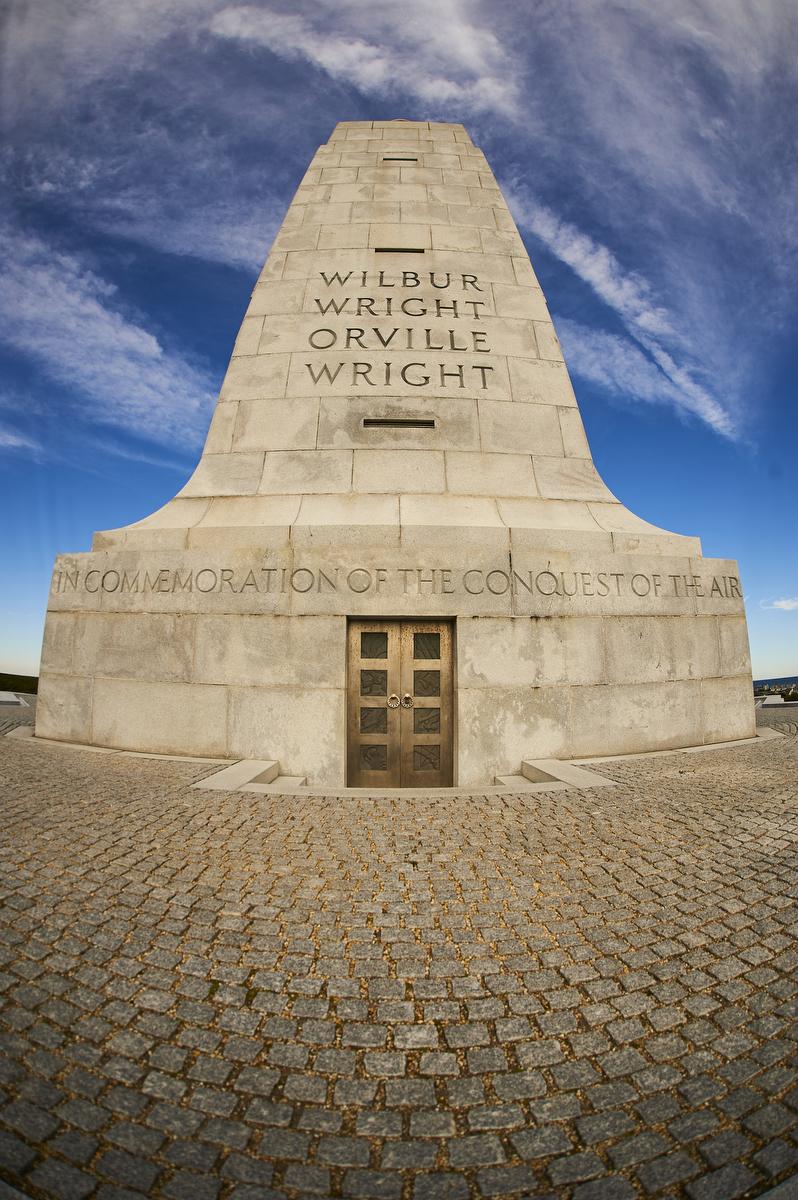
This isn’t a museum that demands attention from start to finish. It allows wandering, skipping, returning, and reinterpreting. You can spend twenty minutes here or two hours and leave feeling like you experienced something complete either way.
The Wright Brothers National Memorial succeeds because it doesn’t isolate history from the present. It places it directly under your feet, surrounded by movement, air, and space.
You don’t just learn what happened here.
You feel why it had to happen here.

